Pourquoi les entreprises de logistique jettent leur dévolu sur la région Centre-Val de Loire
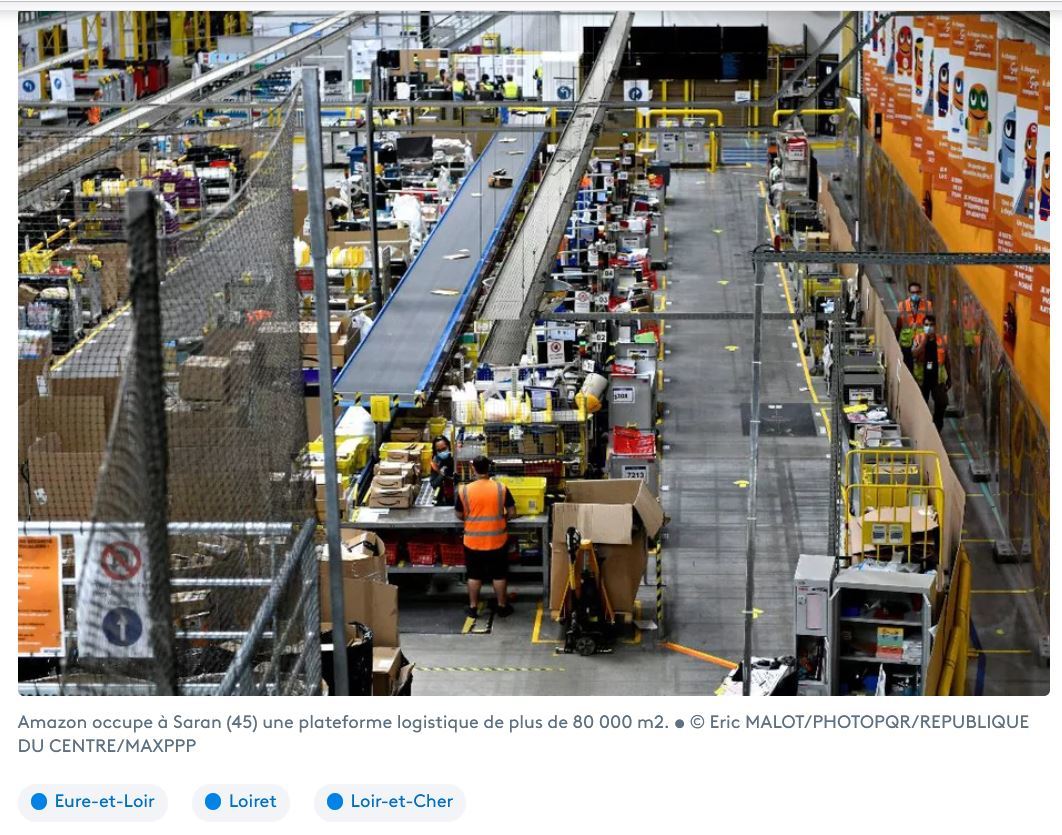
Quand on circule en voiture sur l’autoroute A10 au niveau d’Artenay (Loiret) ou bien sur l’A11 à hauteur d’Illiers-Combray (Eure-et-Loir), on constate des chantiers de grande voire de très grande envergure destinés à terme à accueillir des sociétés de logistique.
Les bâtiments de plus de 10 000 m2 destinés à stocker des marchandises ne manquent pourtant pas dans la région. Selon Dev’up, l'agence de développement économique de la région Centre-Val de Loire, les entreprises logistiques représentent dans la région :
- 1 180 établissements ;
- 6 millions de m2 d’entrepôts (soit 600 hectares).
20 projets de logistique
Ce n’est pas terminé puisque selon EOL, plusieurs projets de plus de 40 000 m2 sont sur la table dont quatre sur la zone d’Artenay-Poupry. En tout, la société recense actuellement une vingtaine d’opérations sur la région Centre (voir encadré), que ce soient des projets dont les permis d’instruction ont été accordés ou bien en cours d’instruction.
Si le Centre-Val de Loire, plus spécifiquement la partie Nord, attire les entreprises de logistiques, c'est pour plusieurs raisons :
- La proximité avec Paris.
- Le maillage routier : neuf autoroutes quadrillent la région, et l’ensemble des projets se trouve au bord de ces axes.
- Le prix du foncier
"Un très net rebond"
Arnaud Veto, consultant logistique Eol en région Centre-Val de Loire, a constaté un "très net rebond depuis trois semaines - un mois", après une année 2020 encore une fois compliquée.
Il souligne d’ailleurs que les offres de bâtiments logistiques sont un peu moins nombreuses dans l'Ouest et le Sud de la région parisienne, ce qui explique en partie que les sociétés cherchent ailleurs et donc "un vrai dynamisme sur la région Centre-Val de Loire".
"Aujourd'hui si on reçoit une demande sur l'ouest ou le sud Ile-de-France, nous n'hésitons pas à lui proposer des sites en région Centre, assure-t-il. Le client gagne sur le loyer au m2 et sur la partie charges et taxes. "
Il existe en effet en Ile-de- France "les taxes entrepôt, les taxes bureaux, tout un tas de taxes diverses et variées qui font tout de suite monter la note", détaille-t-il.
L'explosion du e-commerce
Mais ces groupes qui ont besoin d'espace de stockage ne sont pas tous extérieurs à la région Centre-Val de Loire. On trouve aussi des acteurs déjà implantés dans le territoire qui signent des programmes neufs, notamment sur le marché orléanais.
Le consultant donne l’exemple du Cosmetic Park de Boigny-sur-Bionne (Loiret), un vaste complexe logistique de 80 hectares. Dior s'y est étendu, et L'Oréal s'y est installé dans des bâtiments de dernière génération.
Il y a aussi les entreprises qui se développent car leur chiffre d'affaires explose : c'est notamment le cas dans le e-commerce, avec Aosom France qui, après Droue-sur-Drouette (28) en octobre dernier, s'est installé à Mer (41).
Une région peu artificialisée
Entreprises de e-commerce, mais aussi et surtout grande distribution et prestataires logistiques, ne sont que les locataires de ces immenses bâtiments d'au moins 10 000 m2, construits par des promoteurs.
Ces derniers sont intéressés par le Centre-Val de Loire car il y a aussi de la place : il s'agit d’une des régions les moins artificialisées de France, d’après une étude de l’INSEE. En 2018, les territoires artificialisés représentent 4,4 % du sol, contre 5,6 % en moyenne ailleurs en France de province.
Le Centre-Val de Loire est composé majoritairement en 2018 de territoires agricoles : 72 % contre 59 % en France.
Une accélération des ventes
La Safer du Centre (Société d’aménagement foncier et d’établissement rural) a recensé pour nous toutes les ventes à destination d’un acquéreur privé, supérieure à un hectare et dont la destination est un projet de développement local individuel ou collectif.
Elle avertit d’ores et déjà que ces données correspondent à des structures logistiques mais peuvent inclure aussi des champs de panneaux solaires. "Mais cela n’expliquerait pas à elle seule l’augmentation très marquée de ces dernières années", précise la Safer du Centre, qui constate de fait "une accélération des ventes ces dernières années".
"Si on ne se base que sur les trois dernières années, la tendance serait à la baisse, mais cela est en trompe-l’œil car nous sommes sur un volume d’artificialisation très élevé, analyse-t-elle. Entre 2018 et 2020, ce sont en moyenne 54 actes de vente pour une moyenne de 380 ha. Soit une augmentation de 13 % par rapport à la période 2015-2017."
Il faut aussi prendre en compte l’année 2020 très particulière avec la crise sanitaire qui a figé le pays pendant plusieurs mois.
Vigilance de la profession agricole
Face à cette pression immobilière ressentie, la profession agricole fait preuve de "vigilance" : "même si nous avons encore beaucoup d’espaces agricoles, il ne faut pas se laisser grignoter", assure Edith Chardon, chargée de mission à la Chambre d’agriculture du Centre-Val de Loire.
Une vigilance de la Chambre d'autant plus importante que les agriculteurs n’ont pas forcément leur mot à dire : "en région Centre, ils ne sont pas tous propriétaires de leurs terres, loin de là, s’exclame la chargée de mission. On estime que 60 à 70 % des terres agricoles sont à la location".
Des mécanismes de compensation sont cependant mis en place. D’une part, lorsque des parcelles sont vendues, les exploitants locataires reçoivent une indemnité pour perte de foncier. "On fait attention à ce que ce soit supportable pour eux", précise Edith Chardon.
D’autre part, il existe depuis 2016 le système de compensation agricole, copiée sur le principe de compensation environnementale. "C’est ce qu’on appelle le principe ERC : éviter, réduire, compenser, détaille-t-elle. Pour tout projet d’infrastructure, il y a obligation pour les constructeurs d'éviter de prendre sur le milieu naturel ; si on ne peut pas éviter, de réduire l’emprise ; et si on ne peut pas ni éviter, ni réduire l’emprise, de compenser en achetant proposant un autre espace" dédié aux agriculteurs ou à l'agriculture.
26 556 emplois
Mais cette compensation ne suffit pas à apaiser les préoccupations : "La métropole d’Orléans bénéficiera bientôt d’une 4e sortie autoroutière à Saran/Gidy ce qui risque d’induire encore une nouvelle pression foncière sur la zone", illustre David Meot, responsable de service développement économique à la Chambre d’agriculture du Loiret.
Une "pression foncière" sur des terres agricoles jugées "bonnes", et qui génère "pas beaucoup d’emplois", c'est la vision qu'a le monde agricole du secteur logistique.
Si l’emprise foncière est en effet importante, la question de l’emploi est difficile à vérifier. Selon Dev’up, la logistique compte 26 556 emplois dans la région, avec comme employeurs des multinationales comme Amazon, DHL ou XPO Logistics.
Mais à l’heure actuelle, sur la vingtaine de projets recensée, seuls deux ou trois présentent des objectifs clairs de recrutement (voir encadré).
Les projets de logistique par département en mars 2021
En Eure-et-Loir, sept projets sont recensés dont :
- l'agrandissement d'All Tricks à Châteaudun (24 000 m2) ;
- la construction d'une zone de grande capacité à Illiers-Combray sur 65 hectares. S'il n'y a pas de retard un premier entrepôt de 120 000 m2 sera construit. A terme la communauté de communes espère créer un millier d'emplois ;
- une plateforme logistique de 18 000 m2 à Chartres (livrable sous un an) ;
- le développement d'une plateforme de 80 000 m2 sur la commune d'Auneau ;
- l'entrée en fonction de nouveaux bâtiments sur la zone de Poupry (18 000 m2 sont lancés et livrés en juillet 2021 sur un total de 43 000 m2).
Dans le Loiret :
- trois projets de plus de 40.000 m2 dans la zone d’Artenay (un de 47 000 m2 en cours d’achèvement, un de 95 000 m2, et un de 45 000 m2) ;
- un bâtiment de 74.000 m2 à Boisseaux ;
- un projet d’extension du site de FM Logistic de 45 000 m2, à Escrennes, avec des recrutements à la clé (140 emplois) ;
- à Escrennes toujours, le développement d'une plateforme logistique de 30 000 m2 par JMG Partners ;
- un nouvel entrepôt de 102 000 m2 en cours de construction par Mountpark à Meung-sur-Loire, avec plus de 250 CDI en prévision ;
- la création d'un "écoparc" sur une zone de 40 hectares à Ferrières-en-Gâtinais ;
- le Cosmetic Park à Boigny-sur-Bionne.
Dans le Loir-et-Cher :
- à Mer est en construction le projet de Panhard avec à la clé "plusieurs centaines d'emplois" ;
- encore à Mer, une plateforme logistique développée par Alsei qui proposera 37 000 m2 fin 2022 ;
- des terrains ont été vendus à Romorantin-Salbris pour y créer une zone de grande capacité.
Dans le Cher :
- la société Sider implantée à Buzançais (130 salariés) mène un projet d’extension de 6 000 m2 pour atteindre une surface totale de 24 000 m2. Elle est en cours de recrutement.
Sources: Eol, Dev’up, Chambre d’agriculture du Centre-Val de Loire.
Source: France 3 Centre-Val de Loire
Lien : https://france3-regions.francetvinfo.fr/centre-val-de-loire/pourquoi-les-entreprises-de-logistique-jettent-leur-devolu-sur-la-region-centre-val-de-loire-1995988.html
Auteur: Julie Postollec